
You spot a two year old SUV listed at half the price of every similar model in town, and the only unusual detail in the ad is a short phrase: salvage title. Before you dismiss it as a scam or rush to buy it as the deal of the year, it helps to understand exactly what is a salvage title, because that single line on a vehicle document changes everything about how a car can be owned, insured, financed, and sold.
In this guide, we break down what a salvage title means, how a vehicle ends up with one, how it differs from a clean or rebuilt title, and what it means for you as a buyer, seller, or current owner. By the end, you will know whether a salvage vehicle deserves a place in your driveway or a hard pass.
Salvage Title Meaning: The Short Answer↑ Contents
A salvage title is a legal brand placed on a vehicle’s title by a state motor vehicle agency after an insurance company declares the car a total loss. In plain terms, the insurer decided that repairing the vehicle would cost more than it makes financial sense to spend, paid out the claim, and the state marked the title so every future owner knows the car suffered serious damage.
The key word is brand. A salvage designation is permanent in the sense that it never fully disappears from the vehicle’s history. Even if the car is later repaired and inspected, the title moves to a rebuilt or reconstructed status rather than back to clean. That paper trail exists to protect buyers, because a car that once sat in a flooded parking garage or absorbed a highway collision is simply not the same purchase as one that never did.
Important: a vehicle with an active salvage title generally cannot be registered, insured for road use, or legally driven on public roads in most states until it passes a state inspection and receives a rebuilt title.
How a Car Gets a Salvage Title↑ Contents
The process almost always starts with an insurance claim. When a covered vehicle is damaged, the insurer compares two numbers: the estimated cost of repairs and the actual cash value of the car right before the incident. If repairs approach or exceed a certain percentage of that value, the company totals the vehicle. That percentage, known as the total loss threshold, varies by state. Some states set it at 75 percent, others use 80 or even 100 percent, and several rely on a formula instead of a fixed number.
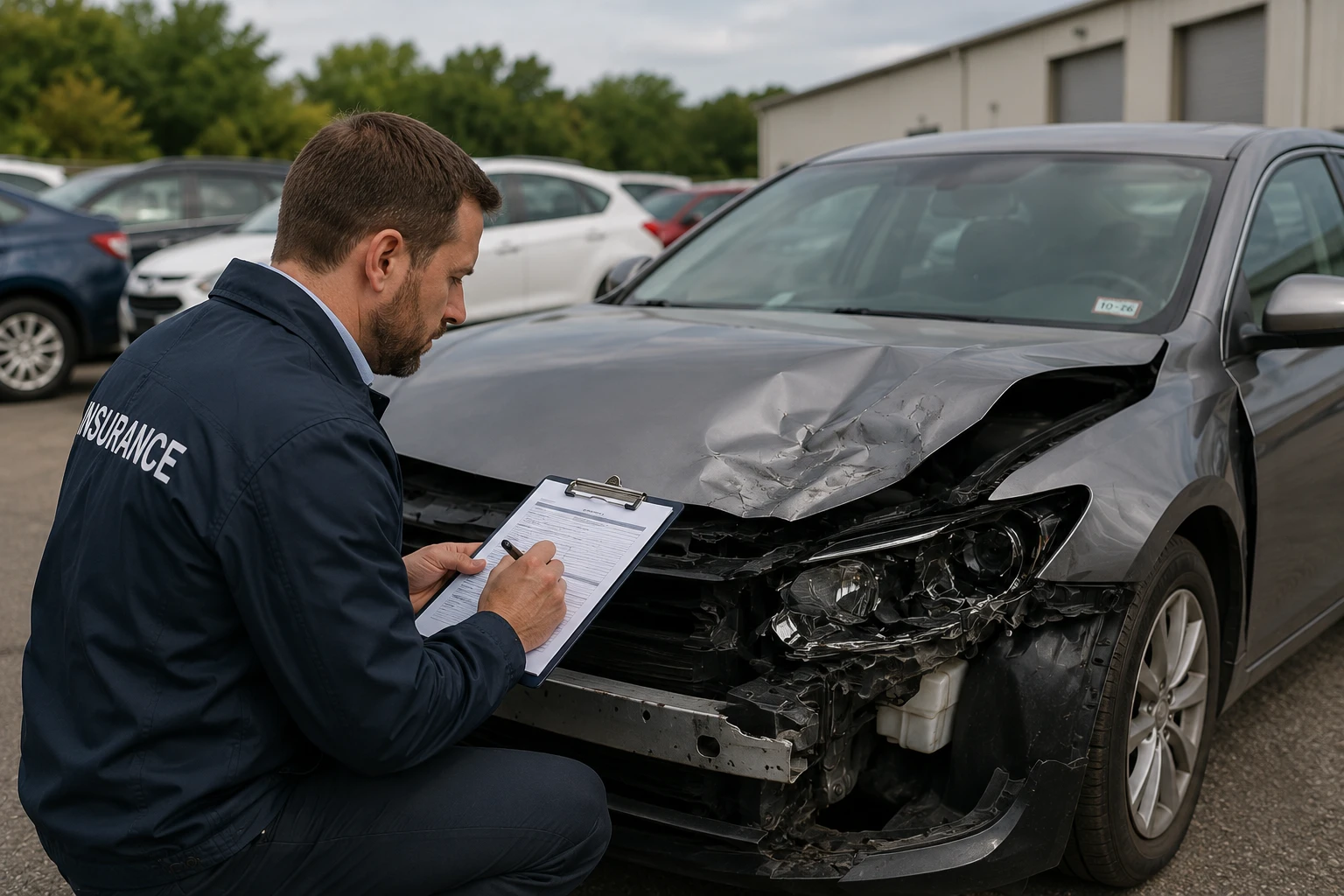
Collisions are the most common trigger, but they are far from the only one. Vehicles are routinely totaled after:
- Flood damage, which can quietly destroy wiring, electronics, and interiors even when the body looks untouched
- Fire damage, whether from an engine fire or an external blaze
- Hail damage, where hundreds of small dents add up to a repair bill larger than the car’s worth
- Theft recovery, when a stolen car is found after the insurer has already paid the owner, or is recovered stripped of parts
- Vandalism severe enough to push repair costs past the threshold
Once the insurer pays the claim, it usually takes ownership of the vehicle, applies for the salvage brand, and sells the car at auction. That is how most salvage vehicles end up on platforms like Copart and IAAI, where rebuilders, dismantlers, exporters, and increasingly everyday bargain hunters bid on them.
Salvage Title vs Clean Title: What Actually Changes↑ Contents
A clean title simply means the vehicle has never been branded as a total loss. It says nothing about mechanical condition, maintenance history, or how gently the car was driven. A salvage brand, on the other hand, tells you with certainty that something significant happened. Here is how the two compare in practice:
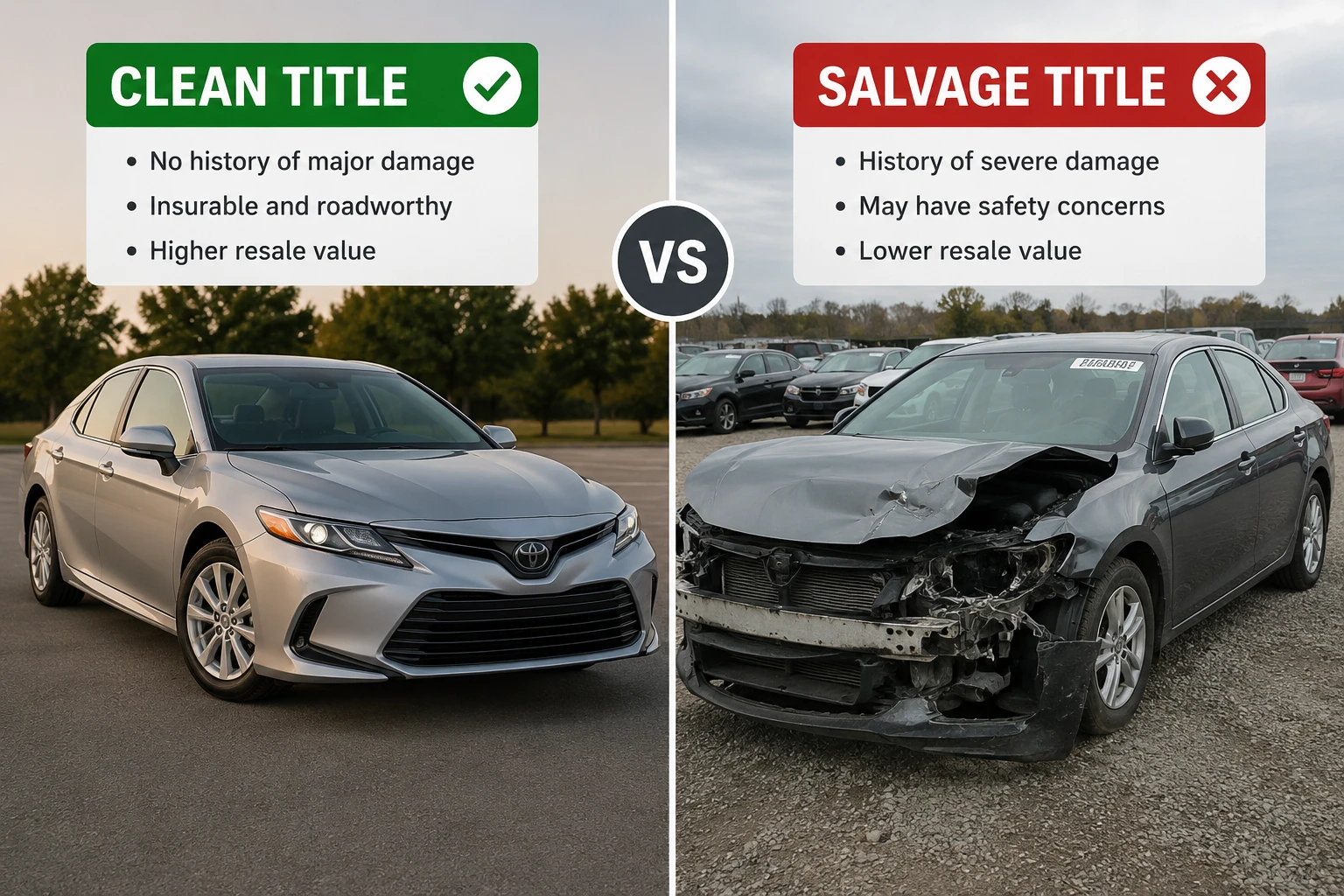
| Factor | Clean Title | Salvage Title |
|---|---|---|
| Legal to drive | Yes, with normal registration | No, not until repaired and rebranded as rebuilt in most states |
| Market value | Full market value | Typically 20 to 50 percent lower, even after repairs |
| Insurance | Full coverage widely available | Often liability only, and only after a rebuilt title is issued |
| Financing | Standard auto loans | Many lenders decline; specialty lenders may help at higher rates |
| Resale | Straightforward | Smaller buyer pool, mandatory disclosure in every state |
One point worth repeating: sellers are legally required to disclose a salvage or rebuilt brand. A seller who hides it, sometimes through an illegal practice called title washing, is committing fraud. This is exactly why running a title history check matters, and we cover that below.
Common Types of Salvage Brands↑ Contents
Not every salvage brand tells the same story. Depending on the state and the cause of loss, you may come across several variations:
- Salvage: the general brand for a vehicle declared a total loss, usually from collision damage.
- Flood or water damage: a specific brand many states apply to flooded vehicles. Treat these with extra caution, since water damage tends to surface months later in the form of electrical gremlins and corrosion.
- Fire damage: applied when fire caused the total loss.
- Hail damage: often the most cosmetic of the brands, which is why some buyers actively seek these cars out.
- Rebuilt or reconstructed: a former salvage vehicle that has been repaired and passed a state inspection, making it road legal again.
- Certificate of destruction or non repairable: the end of the road. These vehicles can never be retitled or driven again and are legal only for parts or scrap.
Understanding which brand you are looking at is half the battle. A hail damaged pickup and a flood damaged sedan might both say salvage at first glance, yet they carry completely different levels of risk.
Buying a Salvage Title Car: Bargain or Trap?↑ Contents
Here is the honest answer: it depends on the car, the damage, and you. Salvage and rebuilt vehicles routinely sell for thousands less than clean title equivalents, and for a mechanically skilled buyer or someone working with a trustworthy rebuilder, that discount can be real money saved. Plenty of people drive rebuilt vehicles for years without a single issue.
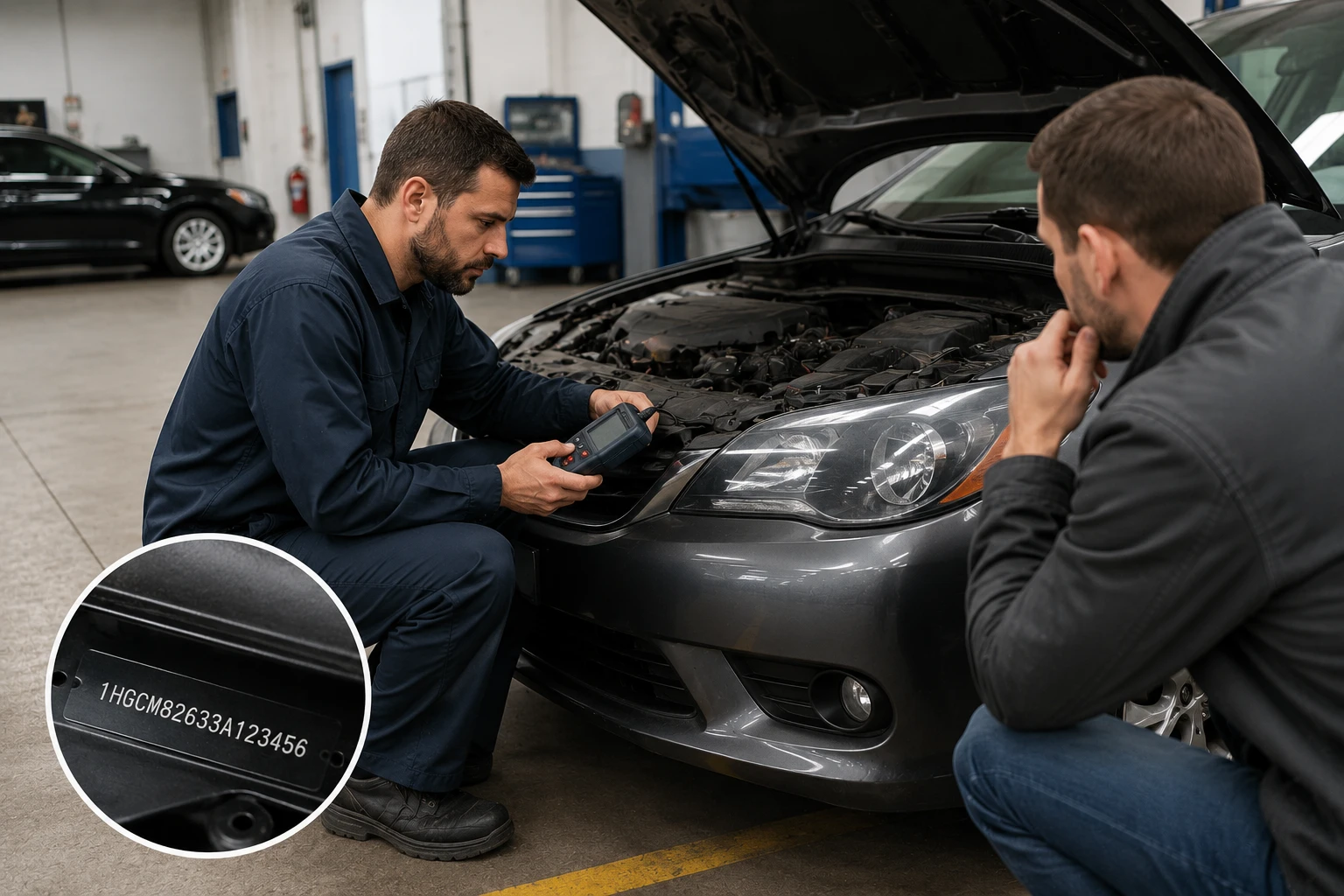
The risks, however, are just as real. Repair quality varies wildly, hidden structural damage can compromise safety, and some rebuilders cut corners with cheap or mismatched parts. Before considering any salvage or rebuilt purchase, make sure you can answer yes to all of the following:
- Do you know exactly what caused the total loss, backed by a vehicle history report and repair documentation?
- Has an independent mechanic or body shop inspected the car, including the frame and airbag systems?
- Have you confirmed you can actually insure it in your state, and at what level of coverage?
- Is the discount large enough to offset the lower resale value you will face later?
- Are you paying cash, or have you confirmed a lender that finances branded titles?
If any answer is no, walk away. There will always be another auction and another listing.
From Salvage to Rebuilt Title: How the Process Works↑ Contents
A salvage vehicle does not have to stay parked forever. Every state offers a path to bring a repairable car back to the road, and while the details vary, the sequence looks broadly the same:
- Step 1. Complete the repairs. All damage that caused the total loss must be professionally addressed. Keep every receipt, and photograph the process if you are doing the work yourself.
- Step 2. Gather documentation. Most states require receipts for major parts, proof of ownership, and bills of sale for any donor components, partly to prove no stolen parts were used.
- Step 3. Pass the state inspection. A state approved inspector examines the vehicle, verifies the VIN, checks the repairs, and confirms the car is safe to operate.
- Step 4. Apply for the rebuilt title. Once the inspection is passed, the DMV issues a rebuilt or reconstructed title, and the vehicle can be registered, insured, and driven legally.
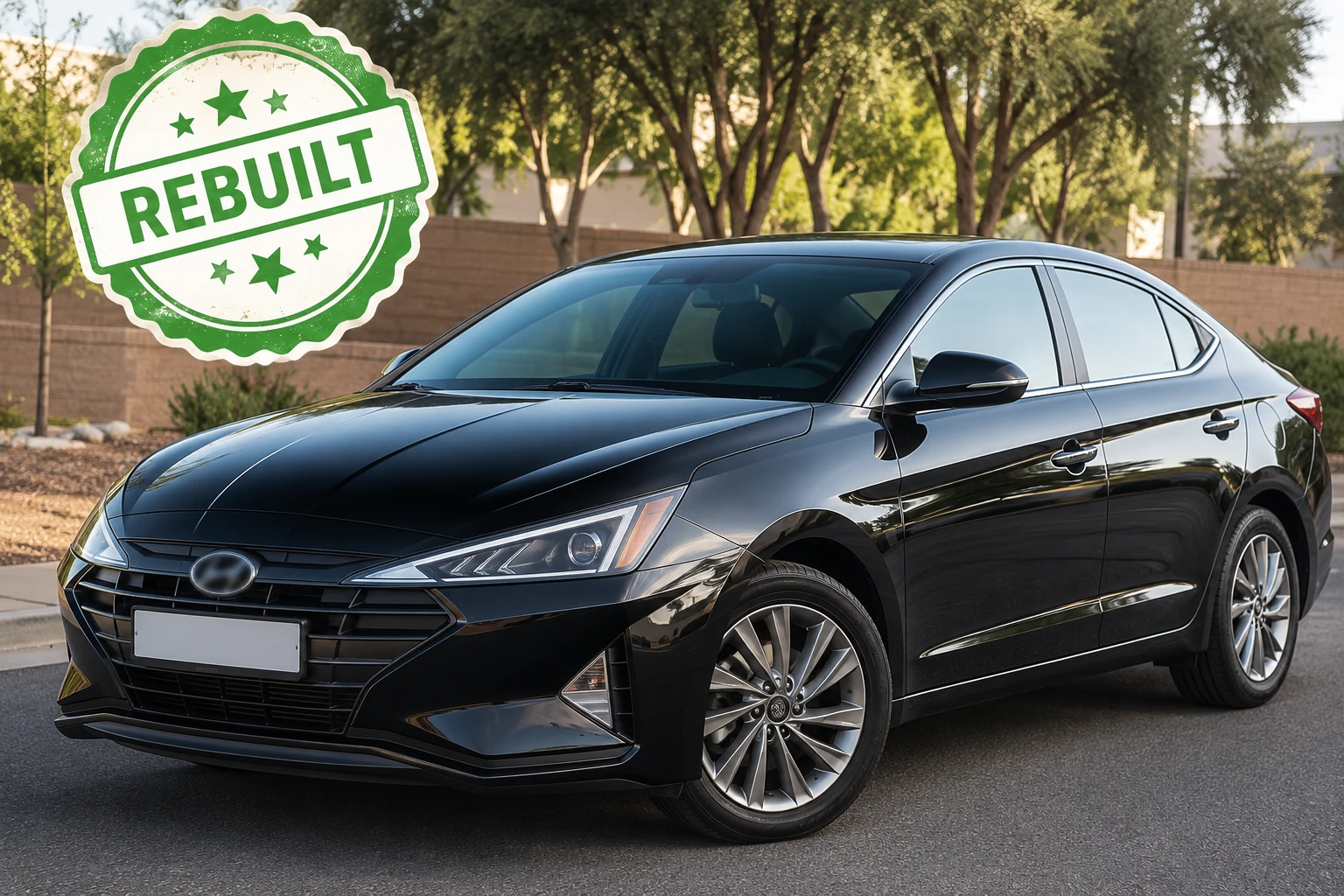
Remember that the rebuilt brand stays on the title permanently. It is a badge of recovery, not a return to clean status, and every future buyer will see it.
Value, Insurance, and Financing: The Financial Reality↑ Contents
Money is where the salvage question gets decided for most people, so let us be direct about the three big items.
Resale value
A branded title typically cuts a vehicle’s market value by 20 to 50 percent compared with an identical clean title car. The exact hit depends on the model, the type of damage, and the quality of documentation. A well documented, hail damaged truck loses far less than a flood branded luxury sedan with no repair records.
Insurance
You cannot insure a vehicle for road use while it holds an active salvage brand. After it becomes rebuilt, most major insurers will sell you liability coverage, but many hesitate to offer full collision and comprehensive coverage, and those that do may pay reduced claims based on the diminished value. Always get insurance quotes before you buy, not after.
Financing
Traditional banks generally avoid branded titles, which is why most salvage purchases are cash deals. Some credit unions and specialty lenders finance rebuilt vehicles, usually with shorter terms and higher rates. Factor that cost into your math when weighing the discount.
How to Check a Title Before You Buy↑ Contents
Never take a seller’s word on title status. Checking takes minutes and can save you thousands:
- Run the VIN through NMVTIS, the National Motor Vehicle Title Information System, which aggregates title brand data across states and is specifically designed to catch title washing.
- Pull a full vehicle history report from a provider such as Carfax or AutoCheck to see accident records, previous owners, and odometer readings.
- Check the NICB free VINCheck tool, which flags theft records and salvage records reported by participating insurers.
- Inspect the physical title document for the brand itself, and confirm the VIN on the paper matches the VIN on the dashboard and door jamb.
If two sources disagree, or a seller resists showing you the title, treat it as the red flag it is.
Frequently Asked Questions↑ Contents
Is it bad if a car has a salvage title?
Not automatically, but it always demands caution. A salvage title means the vehicle was declared a total loss, so the real question is what caused the loss and how well the car was repaired. A properly rebuilt, well documented vehicle can be a solid buy at the right price, while a poorly repaired one can be unsafe at any price.
Can you drive a car with a salvage title?
In most states, no. A vehicle with an active salvage brand cannot be registered or legally driven on public roads. It must first be repaired, pass a state inspection, and receive a rebuilt or reconstructed title before it can return to normal use.
How much does a salvage title reduce a car’s value?
Expect a reduction of roughly 20 to 50 percent compared with the same vehicle carrying a clean title. The discount is smaller for cosmetic damage like hail with full documentation, and larger for flood, fire, or structural damage with thin paperwork.
Can a salvage title ever go back to a clean title?
No. Once a vehicle is branded salvage, that history is permanent. The best possible outcome is a rebuilt or reconstructed title after repairs and inspection, which makes the car road legal but keeps the brand visible to every future buyer.
Can you insure a salvage title car?
Not while the salvage brand is active. Once the vehicle earns a rebuilt title, most insurers will offer liability coverage, and some will offer full coverage after their own inspection. Shopping quotes before buying the car is strongly recommended.
What is the difference between salvage and rebuilt?
Salvage means the vehicle was totaled and is not yet road legal. Rebuilt means a former salvage vehicle has been repaired, passed a state inspection, and can now be registered, insured, and driven. Rebuilt is essentially the second chapter of a salvage story.
A salvage title is not a verdict, it is a history lesson printed on a legal document. Learn to read that history, verify it independently, and run the numbers honestly, and you will know exactly when a branded vehicle is a smart deal and when it is someone else’s problem wearing a fresh coat of paint.

[…] What is a Salvage Title? […]
[…] What is a Salvage Title? […]